
News, ideas & inspiration from industry leaders
Why Limited Admission Shelters Must Get Comfortable Being Uncomfortable
May 31, 2026, Jess Vibert
The goal is not to eliminate or shrink from risks, but to take the right risks, at the right time, in service of better outcomes for animals
By nature, animal welfare is a risk-averse field. That makes sense. We are responsible for lives and for public trust, we are often operating under scrutiny, and we are often under-resourced.
When I started at Furry Friends Humane in 2021, we adopted out about 1,000 animals per year and took in only a handful from our open admission partners. We were doing good work, but we were doing it in a bubble. That was not going to move the needle in Florida, the country’s fourth lowest state for shelter live releases.
Fast forward to 2026, and we are Palm Beach County Animal Care and Control’s number one intake partner for dogs and cats. This year, we will adopt out more than 2,500 animals and transport over 1,500 more from overcrowded shelters across the state to destination organizations and communities with greater adoption capacity. It all started from rethinking what risk means and where we are willing to take it.
We are a mid-size, privately funded organization. We do not have an endowment, or a dedicated development or HR department. We have multiple physical locations, and we require robust liability coverage. Our regional open admission municipal shelter is managing constant intake pressure. Waiting until programs were fully staffed and fully funded just wasn’t an option. Playing it safe kept us small while the need around us grew and grew.
Instead of defaulting to no…
Risk is often framed as, “What could go wrong if we try this?” We find the more useful question to be, “What happens if we don’t?”—because the answers are right in front of us. Animals wait longer in our care. Some decline. Fewer make it out.
That shift in thinking changed how we make decisions. Instead of defaulting to no, we start with yes and work through what it would take to do the work responsibly and effectively. Some ideas do not move forward. Many do, because we are willing to stay in the challenge long enough to find a path.
Thinking beyond the “pull partner” model
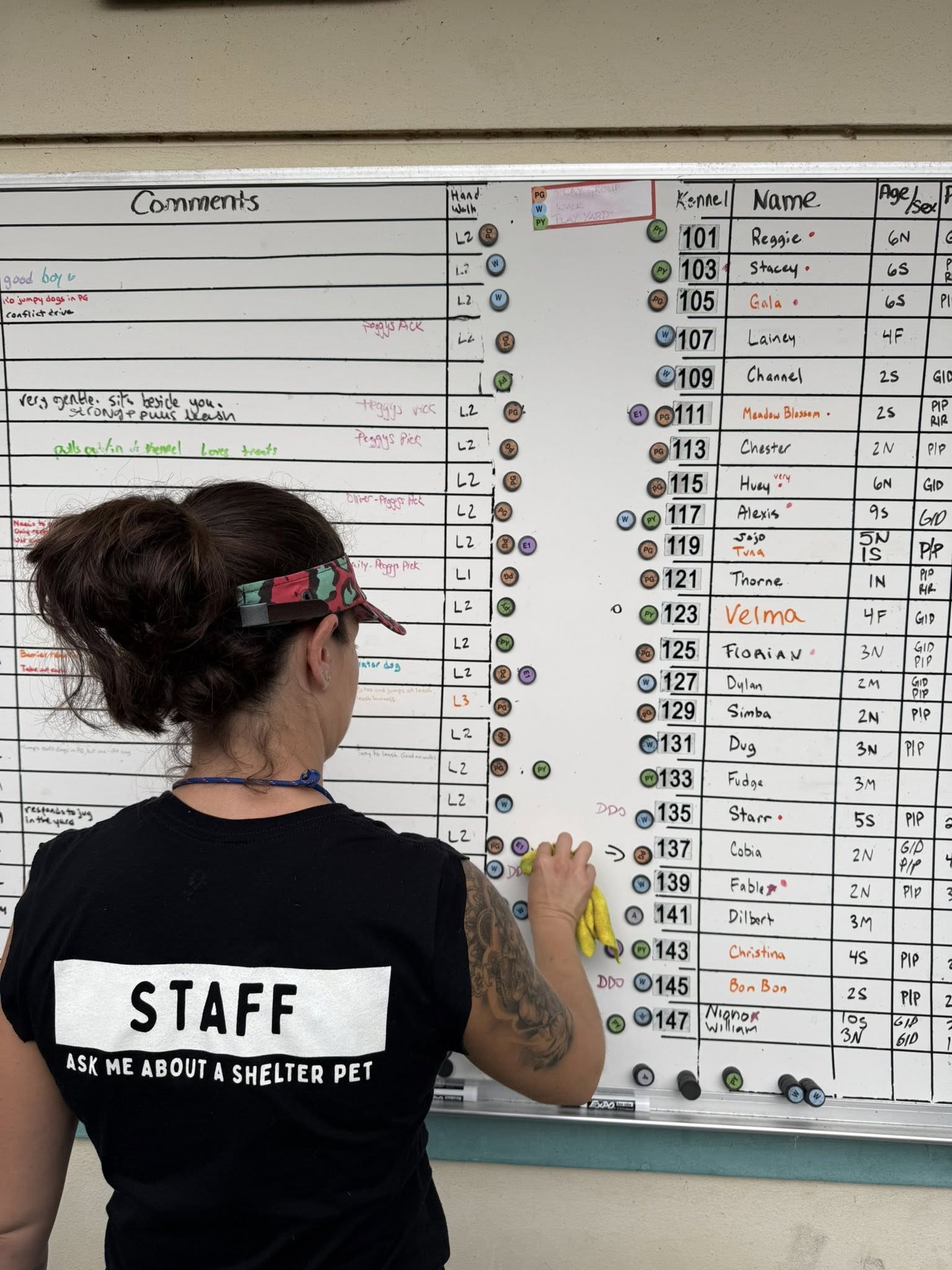
One of the most impactful changes we have made is moving beyond a traditional “pull partner” model. Together with Animal Farm Foundation, a fellow 501(c)(3) organization, we embed canine behavior and enrichment staff at Palm Beach County Animal Care and Control. These team members run playgroups, provide in-kennel and out-of-kennel enrichment, and are present where intake decisions and early behavior observations happen. The program requires trust and clearly defined roles across organizations. It also requires our team to step into a space that is not fully their own.
The data tell us interventions like these work. Dogs are better understood earlier. Decisions are more informed. Length of stay is reduced. When limited admission shelters wait until animals leave the municipal system to intervene, it is often too late.
The need for this work exists whether you take it on or not
At the same time, improving live outcomes for cats in our region necessitates a broad commitment to supporting the most medically vulnerable populations. This year, we’ve made a concerted effort to expand our kitten foster program with a strong emphasis on bottle baby care. These kittens need intensive medical support and trained, confident fosters. The work demands coordination across intake, volunteer, and medical teams.
Much-needed support has come from unexpected places. We developed a simple AI-coded app that structures communication with neonatal fosters, provides real-time guidance, and allows escalation of medical and wellness concerns without burning out our staff. We also expanded training and onboarding so that the program is more accessible, and worked with local schools to engage students and families during school holidays as foster caregivers. The need for this work exists whether an organization takes it on or not. By investing in it, we have been able to expand capacity in a way that is structured, sustainable, and forward thinking.
Looking differently at what community support entails
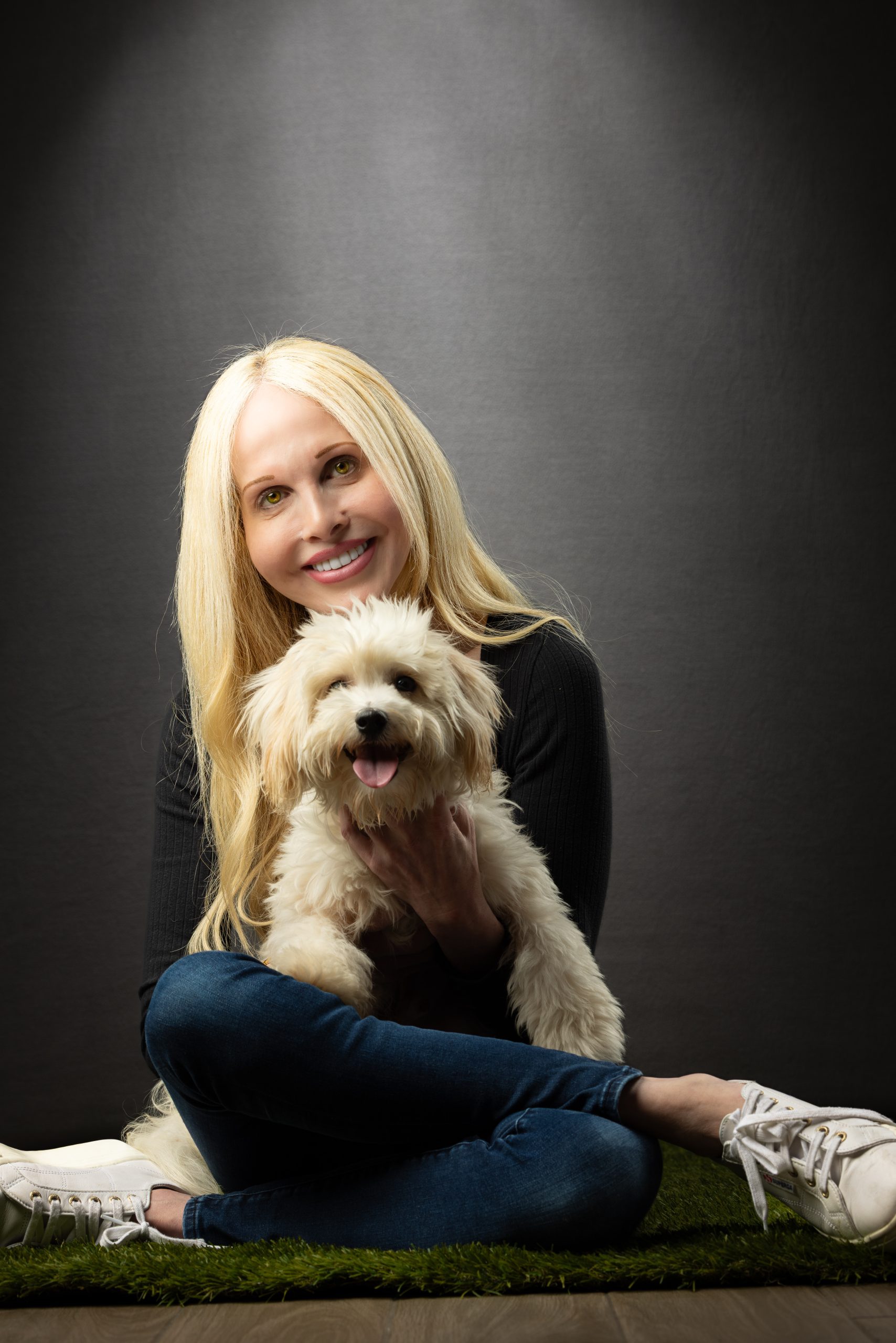
We began leveraging community support in non-traditional ways. When a long-stay dog had a committed adopter whose only barrier was a lack of fencing, a donor funded the project and our facilities team built the fence themselves. We partnered with a professional photographer to create adoption portraits that help adopters celebrate and bond with their new pets from day one. These may be relatively small interventions, but they reflect a broader mindset: barriers are often more solvable than they initially appear.
Leadership from outside the field
Our CEO Jason Gluck’s background is in entertainment and business management, not animal welfare. In 2022, our board made a bold and unconventional choice in selecting him to step into the role after serving as co-chair of the board—a choice that has had a meaningful and growing impact on animals in our region and beyond. That mindset carries through in how decisions are made. It can result in less reliance on precedent and more willingness to test ideas, move quickly, and adjust as needed. Staff are encouraged to come up with solutions, challenge assumptions, and pursue ideas that may not fit neatly into the traditional wisdom of our field.
A major result? It’s made it easier to question assumptions that underpin the status quo. Assumptions about whether lifesaving work must happen only within the walls of one organization, whether small and mid-size shelters can meaningfully influence broader outcomes, whether expanding neonatal kitten support is too logistically challenging, whether open communication and collaboration between organizations creates more risk than opportunity. It has also reinforced the idea that meaningful change does not always need to start at the national level, and that local organizations, working closely with their own communities, must play an important role in testing and advancing new approaches.
The goal is to take the right risk
This work demands adaptability. Embedding staff requires ongoing, rapid communication across organizations and locations. Neonatal programs need structure and continuous support. Yet there are often few incentives for limited admission organizations to invest in outcomes beyond their own walls.
Choosing protectionism has its own consequences. Delayed action and constrained capacity affect downstream outcomes in ways that are not always immediately visible, but no less real for animals and people. Even limited admission shelters rarely have perfect conditions. Waiting for them means doing less for those who need us most.
At our organization, being progressive has meant asking harder questions and acting on them. The goal is not to eliminate risk or shrink from it. The goal is to take the right risks, at the right time, in service of better outcomes for the animals and the communities that depend on us.

About Jess Vibert
Jess Vibert is Chief of Staff at Furry Friends Humane, where she helps guide strategy, operations, and innovation for one of South Florida’s leading animal welfare organizations. With more than a decade of experience in the field, her work focuses on building and sustaining programs that expand access to care, strengthen shelter systems, and address the root causes of animal homelessness.
Leave a Reply
Search The Association Blog
Contribute to The Blog

What behavior assessment program do you find the most reliable and quantifiable, we have tried the MYM SAFER assessment and it has continued to be completely inaccurate once the animal has left the shelter and entered a home.