

News, ideas & inspiration from industry leaders
Tugging Heartstrings Without Pulling Punches: The New Rules of Fundraising
March 3, 2026, Jolene Miklas
For decades, the nonprofit fundraising playbook was simple. TrueSense Marketing’s Creative Director outlines the new guiding principles

The rules of nonprofit fundraising are being rewritten as you read this.
For decades, the playbook was simple: Show the most heartbreaking images; use language that induces guilt or shock; and position the donor as a savior who rescues animal victims from “bad people.” Although this approach, sometimes called “rage-baiting,” raised money, it came at a significant cost. It frequently perpetuated stereotypes and “othered” those we sought to help.
Today’s donors are different. They’re often savvy, skeptical, and growing exhausted by division. They’ve lived through a pandemic, inflation, global crises, and a climate of nonstop conflict. They have great empathy, but sometimes little hope.
To connect with this modern audience, we must evolve to embrace a new set of rules. It’s time to move away from individual blame and toward a systems reframe, creating campaigns that are inclusive, compassionate, and effective — without sacrificing revenue.
Here’s how you can implement compassionate storytelling and position your donors as partners in your mission.
The Shift: From Deficit to Strength
Traditional fundraising often relies on a deficit-based model. It focuses on what’s lacking, defining beneficiaries by their struggles. It relies on shame, outrage, and helplessness to drive action.
Today’s fundraisers focus on strength-based messaging. This approach emphasizes the capabilities, opportunities, and power of an individual, group, or community. It represents people and animals in a way that feels true and empowering to them.
What Does Strength-Based Messaging Look Like?
First, let’s be clear: It does not mean ignoring or sugarcoating the problem. Cruelty and neglect still exist, and we cannot sanitize the truth. However, we can change the lens through which we tell the story.
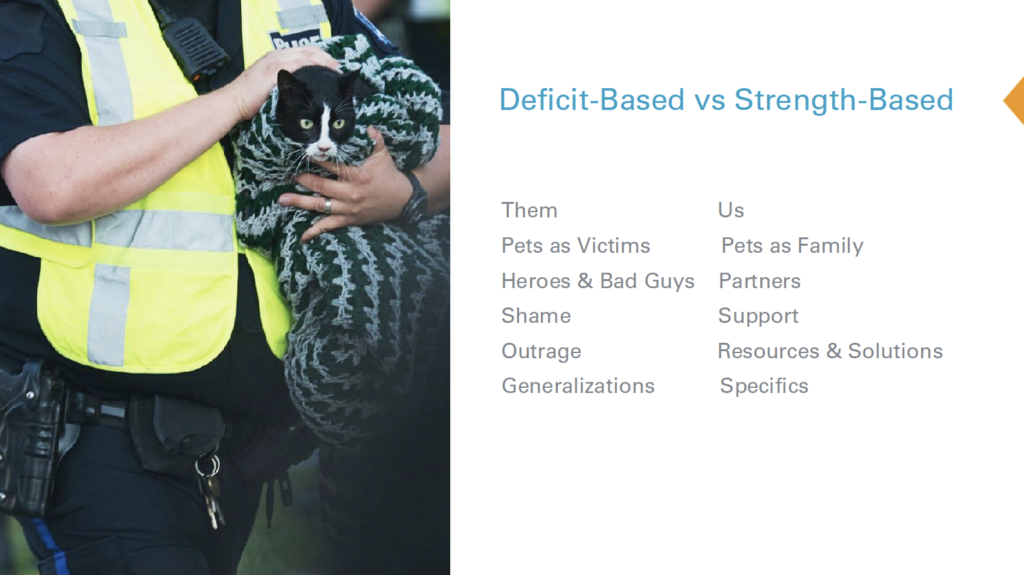
Consider the difference between these two frameworks:
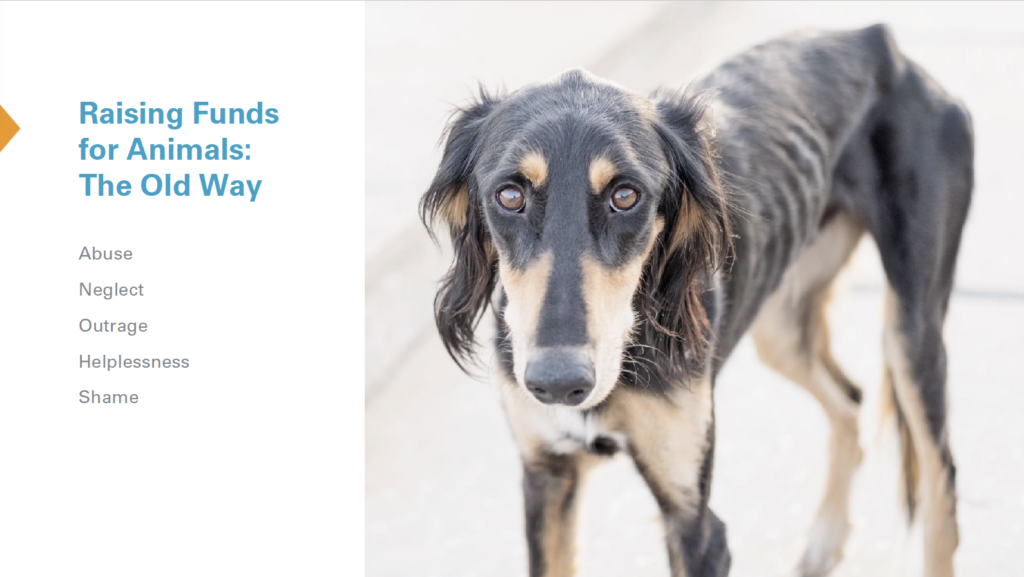
- Deficit-Based (Old Way): Focuses on “them” versus “us.” Pets are portrayed strictly as victims. The narrative relies on heroes and villains and often reinforces unfair stereotypes, such as going into “bad neighborhoods” to rescue animals from “bad people.” It takes shortcuts, implying that every pet who is surrendered is “abandoned” by an irresponsible owner.
Strength-Based (New Way): Focuses on shared humanity. Pets are portrayed as resilient, loving family members. Struggling individuals and families are presented with compassion and nuance. The narrative builds on partnership, support, and specific solutions to make communities more humane for all.
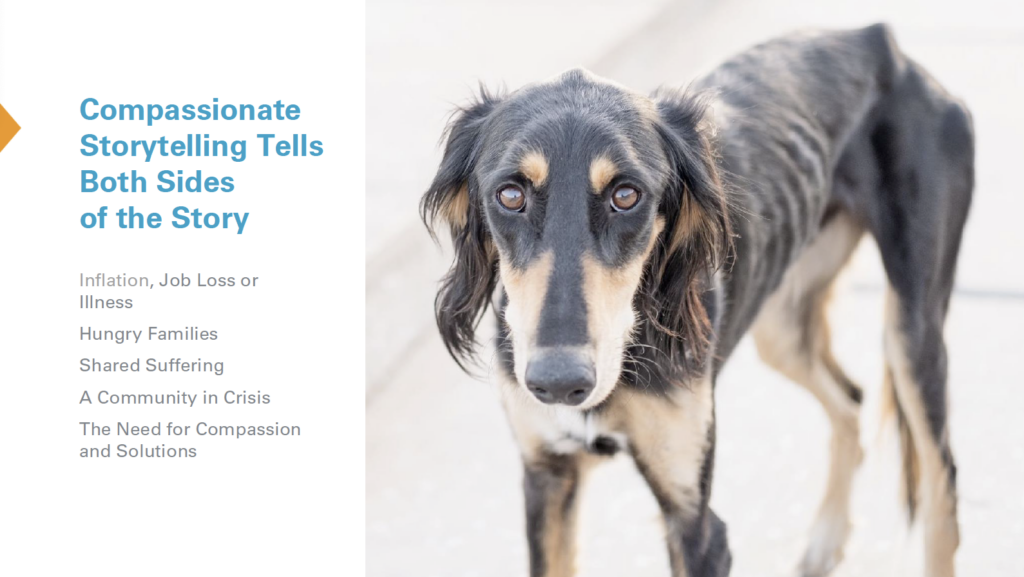
Strength-based messaging encourages long-term support, rather than a one-time gift born of guilt. It fosters equity by showing communities the way they want to be represented, rather than reinforcing harmful stereotypes.
Balance Best Practices with New Practices
Adopting these new rules does not mean abandoning the proven fundamentals of direct response fundraising. The goal is to marry best practices (what we know raises revenue) with new practices (what we know is ethical and sustainable).
What to Keep (Best Practices)
- A clear offer
- Urgency
- Specificity: What exactly will the donation provide?
- Simple, direct language
- A one-to-one connection: Speak directly to the donor as “you”
What to Change (New Practices)
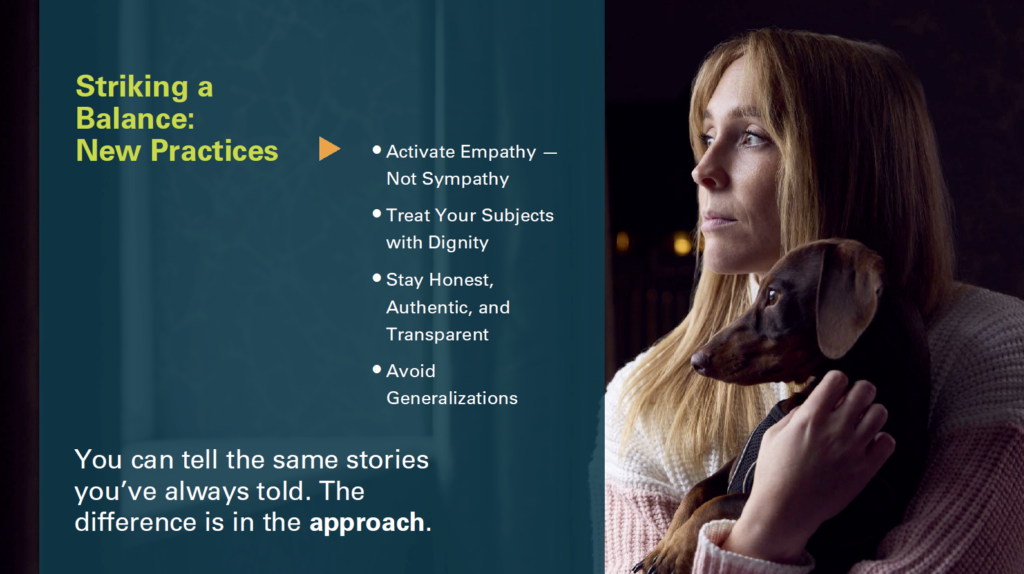
- Activate empathy, not sympathy
- Imbue stories with dignity: Treat your subjects, both human and animal, with respect and compassion
- Stay honest, authentic, and transparent (even when stories are hard to hear!)
- Avoid generalizations
Center Stories on the Animal’s Second Chance, Not the Villain
Consider two ways to tell the story of Beignet the dog.
Approach 1
Beignet’s person neglected her. He kept her outside for months and didn’t provide enough food or care. Over time, Beignet’s ears became infested with mites, causing her to suffer two painful ruptured eardrums. Her owner finally surrendered her to the shelter, where our veterinary team rushed to care for her.
What’s wrong with this story? For one, it creates a villain, even though we don’t know what may have happened to Beignet’s owner. He may have been hospitalized, or perhaps he did the best he could to keep her somewhere after they lost their housing. Like Beignet’s person, someone in your community may be struggling to care for a beloved dog right now. Stories like this one reinforce the idea that people who need help and resources are bad people.
Another way to tell this story is to center the truth on the animal.
Approach 2
Beignet loves cuddling and taking naps next to a friend, but for months, the sweet dog lived outside, alone. Without comfort or care, a painful ear mite infection went untreated, eventually rupturing both of her eardrums. When Beignet came to us, she was in pain. She needed help right away.
When you center your story on the animal’s experience, you move away from blame. You invite the donor to be part of their second chance.
Position Donors as Partners, Not Saviors
Instead of relying on victims and saviors, today’s fundraising positions donors as partners in a community of caring.
Instead of erasing the need, show the power of working together to create solutions and improvement. Highlight programs such as pet food banks or low-cost veterinary services that help pets stay with the families that love them.
And instead of avoiding or sugarcoating difficult stories of cruelty, stand firm in your values. Speak the truth with compassion. Build trust by showing empathy and understanding.
A Self-Test for Compassionate Storytelling
As you draft your next appeal, use this simple self-test:
- Inclusion: Do we need to address considerations surrounding race, language, class, or ability? Are we relying on or inadvertently leaning in to stereotypes?
- The “Subject” Test: If the subject of this story (or their family) were to read it, how would they feel? Would they feel honored and understood, or shamed?
- Core Principles: Is this an opportunity to advance our organization’s deeper values?
Conclusion: Helping Pets Helps All of Us
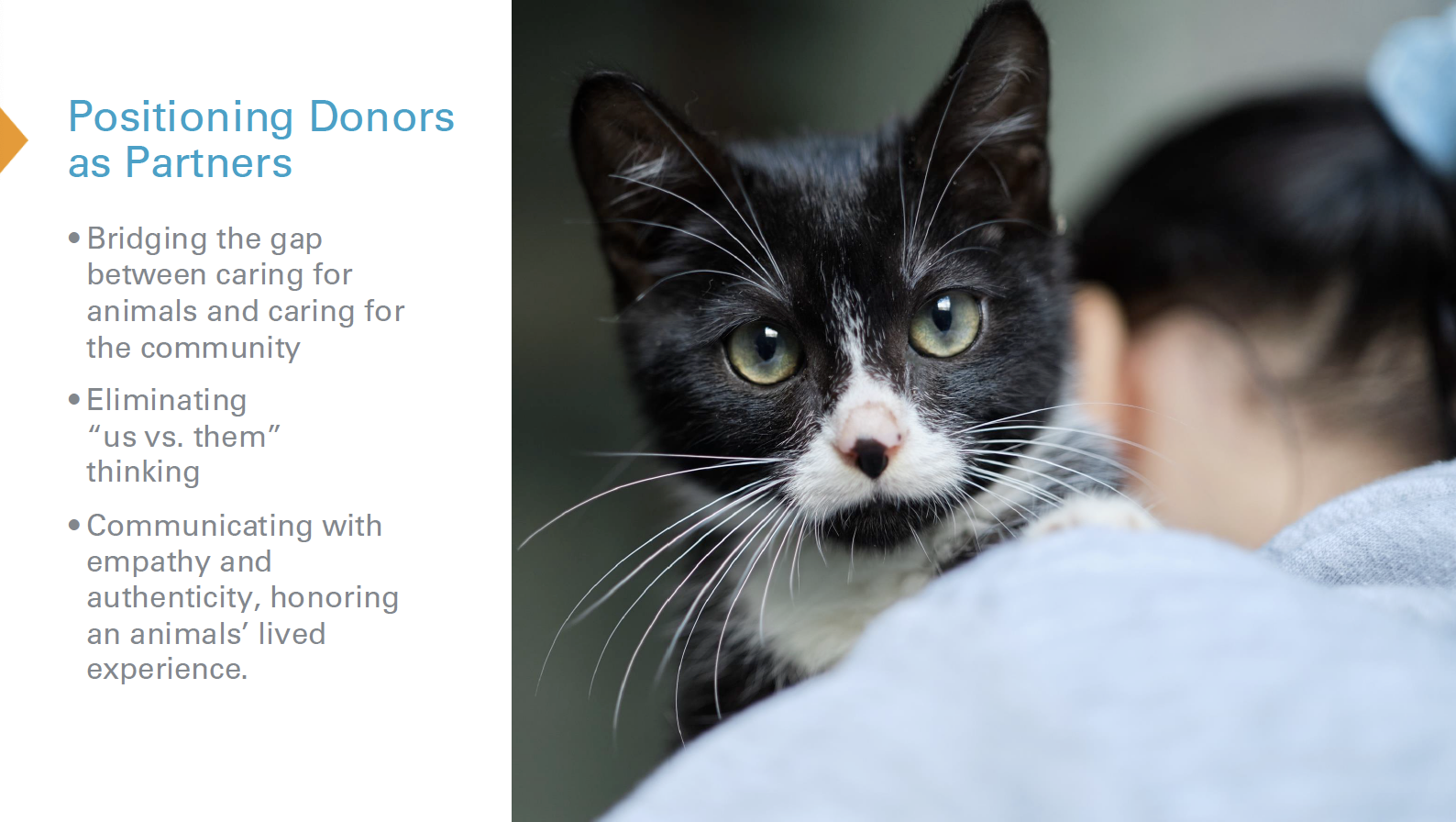
By shifting from individual blame to a systems reframe, and by balancing the urgency of need with the dignity of strength-based messaging, we can bridge the gap between caring for animals and caring for the community. We eliminate “us versus them” thinking.
The new rules of fundraising aren’t just about protecting our donors from uncomfortable stories. They’re about being smarter, more empathetic, and more effective in the ways we tell them. We know that helping pets helps all of us, and together, we can empower donors to nurture humane communities for all.
More from the Experts at TrueSense Marketing
It’s All About the Eyes: A Case Study in Charitable Giving
The 5 Building Blocks of the Perfect Collaborative Fundraising Partnership
Who You Callin’ “Lapsed?”

About Jolene Miklas
Jolene Miklas is Creative Director–Animal Care at TrueSense Marketing. “I've dedicated my life and career to helping animals,” she says. “I've been an animal shelter employee, pet foster parent, adopter, and volunteer. Today, I combine my hands-on shelter experience with a decade of agency experience to bring both heart and science to shelter fundraising.”
Search The Association Blog
Contribute to The Blog

View by Category
Administration & Finance
Development
Diversity, Equity & Inclusion
Guest Voices
Human Resources & Operations
Leadership
News
Social Media & Marketing
The Association
Tip of the Week
Veterinary Care
Recent Posts