

News, ideas & inspiration from industry leaders
Letter from the President: Information (and Hill’s State of Shelter Pet Adoption Report) Is Power
April 3, 2026, Jim Tedford
What shapes decisions behind large dog adoptions? It’s all in the report
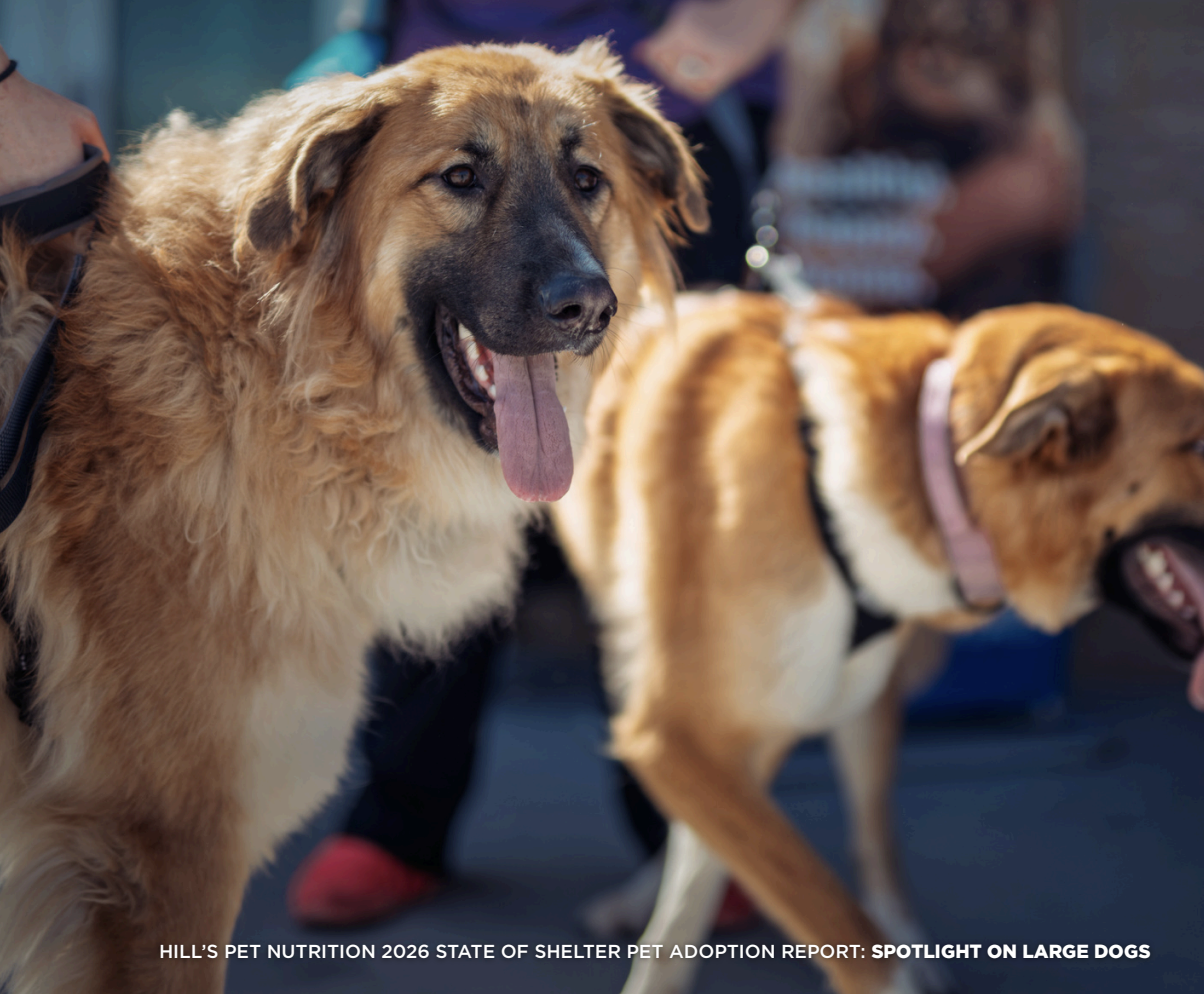
Information is power, and our friends at Hill’s Pet Nutrition have once again knocked the ball out of the park. In their fourth annual State of Shelter Pet Adoptions Report, Hill’s demonstrates just how well they understand the challenges facing animal welfare organizations. In this year’s report, the focus is on perhaps the most vulnerable population cared for by shelters—large dogs. Hill’s research, including a survey of 2,000 US households along with national shelter data, examines the perceptions, barriers and motivations that shape large dog adoption decisions.
To those of you operating shelters, it likely comes as no surprise that large dogs represent an ever-growing segment of intakes. In the post-COVID era, we’ve seen even more big dogs coming into the system. And they often carry extra baggage—like a lack of proper training/socialization and the corresponding behavior challenges. But even those larger dogs without behavior problems face higher barriers to adoption. The 2026 Hill’s State of Shelter Adoption Report provides excellent information to help animal welfare organizations explore practical, data-based solutions to help place more large dogs with new families.
Some of the study’s key findings:
- Large dogs are waiting longer to find homes than smaller dogs, increasing the strain on shelter space and resources and creating added stress for the dogs themselves. According to Shelter Animals Count, large dogs spend 70% longer in shelters than small dogs.
- The biggest barriers to large dog adoption include:
- Cost of feeding
- Physical ability
- Limited living space and a lack of available housing to accommodate large dogs
- Cost of veterinary care
- Potential adopters lack confidence in caring for big dogs
- Different generations behave differently! Adopters in younger generations are nearly twice as likely to consider adopting larger dogs as older generations. However, younger adopters are more likely to face housing limitations.
Thanks to Hill’s for walking hand-in-hand with animal welfare organizations for decades. This year’s report provides clarity in how shelters might change their approaches/priorities to encourage big dog adoptions. That includes educating adopters on the fact that many larger breed dogs do fine in limited living space as long as their exercise needs are being met. You can also consider getting involved in the expansion of available pet-friendly housing to remove that barrier to adoption—this alone could be game-changing! And consider offering services or programs such as behavioral support and early financial assistance to help offset the added costs of adopting a larger dog.
Our profession has never been short on ingenuity and innovation to make things better for animals and the communities we serve. You’ve probably heard me say that the real strength of The Association is in this powerful network of professional. So, let’s have it. What is your organization doing to encourage increased adoption rates for large dogs?
I encourage you to keep innovating, keep working hard and continue sharing with one another. Together we have changed the world, and together we will continue to do so.
Let’s lead the way—together,
Jim


About Jim Tedford
Jim Tedford, CAWA, is President and CEO of The Association for Animal Welfare Advancement.
Search The Association Blog
Contribute to The Blog